If you are getting constant messages from people promising to fix your Shopify store, the decision is not whether outside help is always bad. The decision is whether the person can diagnose the right problem, define a clear scope, protect store access, and reduce launch or conversion risk before they touch the store.
- Cold Shopify expert outreach is a trust problem, not proof that every store needs immediate paid help.
- A useful provider should diagnose the buyer-path problem before proposing SEO, CRO, redesign, apps, or theme edits.
- Never give broad admin access before the scope, permissions, owner, timeline, QA plan, and rollback plan are clear.
- Freelancers, agencies, internal teams, and curated marketplaces can all be rational choices when the project risk matches the model.
- The best first step is often a store first-look or scoped audit, not a full rebuild or open-ended monthly retainer.
Founders should vet Shopify experts by asking for a diagnosis before a proposal, a written scope before store access, and acceptance criteria before work starts. A serious provider should explain what they inspected, which business risk they are reducing, what will change, what will not change, which permissions they need, how pricing works, how QA will be done, and what the owner can manage after handoff. Be careful with anyone who leads with a generic promise to improve SEO, sales, or speed without showing the actual bottleneck in your store. The right help should make the next decision clearer, not create more dependency.
The moment after a Shopify launch is commercially sensitive. You have a live store, real products, maybe a campaign coming, and a long list of things that still feel uncertain: conversion, mobile UX, SEO, checkout, speed, product pages, tracking, and whether the store looks serious enough for paid traffic.
That is exactly when cold outreach feels noisy. A recent r/shopify discussion described new store owners receiving nonstop emails, messages, and video-call requests from people claiming they can improve the website, SEO, or sales. The useful signal is not that every pitch is fraudulent. The signal is that founders need a filter before buying help.
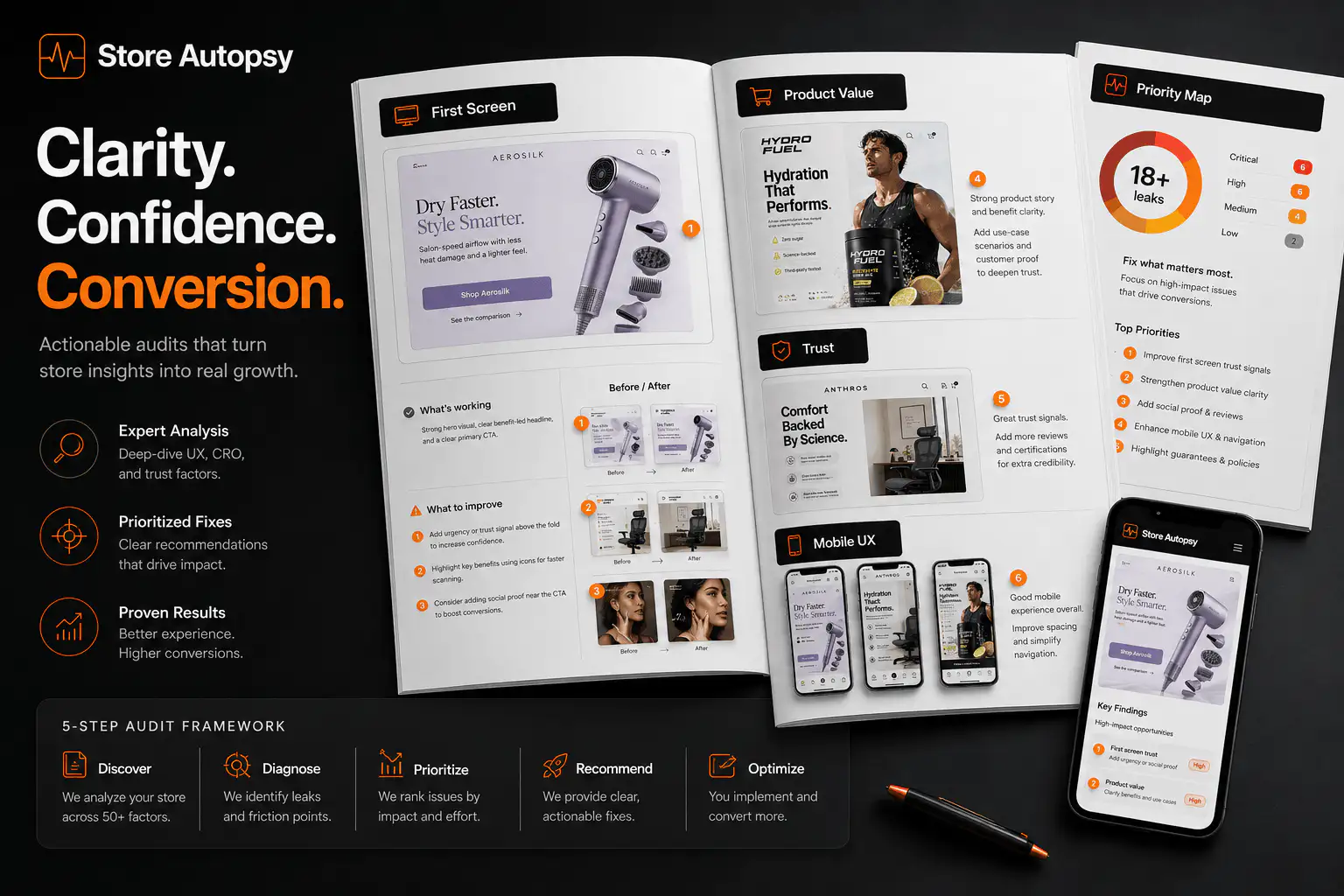
What decision are you really making?
The real decision is not whether to hire a Shopify expert. The real decision is what risk you need removed. A new or growing store may need a narrow theme fix, a product-page redesign, a checkout QA pass, a migration cleanup, analytics repair, a CRO audit, or a full rebuild. Those are different jobs with different buyers, budgets, permissions, and timelines.
A good provider narrows the problem before expanding the scope. A weak provider does the opposite: they turn every symptom into the thing they sell. If they sell SEO, your problem becomes SEO. If they sell speed, your problem becomes speed. If they sell redesign, your current theme becomes the problem before anyone has looked at the buying path.
Who is this advice for and not for?
This is for founders and operators with an existing business, a validated product, or a real launch window. You may already have customers, traffic, a seasonal campaign, or a store that looks acceptable but does not feel sales-ready. You are not trying to buy the cheapest possible task. You are trying to avoid paying for the wrong work.
This is not mainly for developers choosing tools, zero-budget beginners looking for free theme tweaks, or people who need a one-line Liquid snippet. Technical tasks matter, but the hiring decision should be framed around commercial risk: launch delay, broken checkout, weak trust, poor mobile buying flow, tracking gaps, and owner dependency after handoff.
What should happen before any proposal?
Before a proposal, the provider should ask enough questions to understand the business situation. What changed recently? Are you launching, scaling ads, migrating, redesigning, or fixing a known conversion drop? Which products matter most? Which traffic source is most important? What does success look like after the work is done?
- They should ask for the store URL before prescribing a solution.
- They should separate symptoms from causes.
- They should identify the buyer path they inspected: homepage, collection, PDP, cart, checkout, mobile menu, or tracking.
- They should explain what evidence supports the recommendation.
- They should tell you what they cannot know without admin, analytics, or checkout access.
- They should be comfortable recommending a smaller scope when a full rebuild is not rational.
| Bad early signal | Better signal |
|---|---|
| Your SEO is bad, I can fix it | I found three indexed-page and collection-title issues, but the paid-traffic PDP path looks like the bigger risk |
| Your theme is not converting | Mobile buyers see product title, price, variants, and CTA before proof or shipping reassurance |
| I guarantee more sales | This scope can reduce specific friction; revenue also depends on traffic quality, offer, pricing, and fulfillment |
| Give me access and I will check | Here is what I can inspect publicly first; here are the exact permissions I need next |
| Monthly retainer only | Start with a fixed diagnostic or scoped implementation if the problem is not yet proven |
How do you choose between freelancer, agency, theme, AI, or internal team?
There is no universal best option. A freelancer can be the right choice for a contained technical change. A theme can be rational when the offer is simple and the founder can configure it well. An internal team can move fastest when the team understands ecommerce UX and can own QA. An agency is rational when the cost of missing the launch, breaking the buying path, or choosing the wrong scope is higher than the agency premium.
| Option | Best fit | Main risk |
|---|---|---|
| Theme or AI build | Simple catalog, low stakes, founder has time to configure and QA | Looks finished before the buying path is actually sales-ready |
| Low-cost freelancer | Defined task with clear acceptance criteria | Weak diagnosis, poor QA, or dependency when the task touches shared templates |
| Specialist marketplace | You know the task and want a narrower provider pool | Still need to judge scope, communication, and handoff |
| Internal team | You have ecommerce UX, analytics, and QA ownership in-house | Team ships tasks but misses buyer-path tradeoffs |
| Shopify agency | Launch, redesign, migration, or CRO scope where diagnosis and ownership matter | Overbuying if the real need is small or poorly defined |
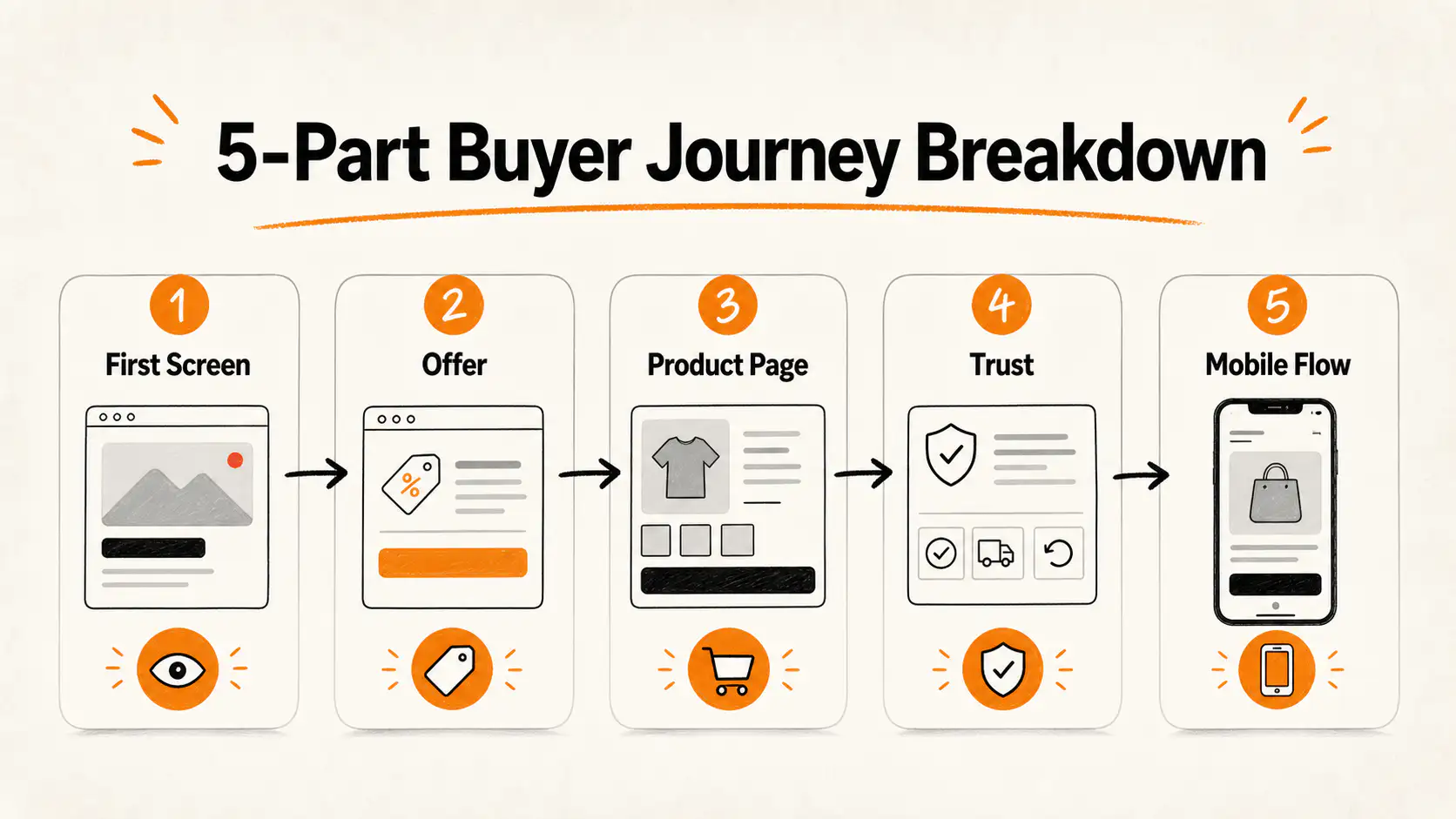
What proof should you ask for?
Proof should match the work. For a PDP redesign, ask to see product-page thinking, not only full-site screenshots. For a migration, ask how redirects, product data, customer experience, SEO, and checkout were protected. For CRO, ask how they diagnose without pretending every change needs a formal test. For launch QA, ask what gets tested before traffic goes live.
- Examples from similar store complexity, not only similar visual style.
- A before/after explanation of the decision, not only a prettier screenshot.
- A clear description of the provider's role in the work.
- References, public reviews, or marketplace profile where relevant.
- Evidence that they think about mobile buying paths, not only desktop design.
- A handoff example: documentation, editable sections, training, or post-launch support.
Be careful with borrowed authority. A provider can show big logos, app badges, or platform language without being right for your project. The stronger question is: can they explain the tradeoff your store is facing and what a good finished state looks like?
How should scope be written?
A good Shopify scope does not list random tasks. It defines the business outcome, the surfaces being changed, the deliverables, what is excluded, how decisions are approved, and what happens if the work uncovers a bigger issue. This protects both sides.
- Objective: the commercial risk the work should reduce.
- Surfaces: theme, PDP template, collection page, cart, checkout, analytics, navigation, content, apps, or policies.
- Deliverables: audit notes, wireframe, design, implementation, QA report, handoff docs, training, or support window.
- Exclusions: apps, copywriting, product data entry, photography, subscriptions, localization, email flows, SEO migration, or ad setup if not included.
- Acceptance criteria: what must be true before the work is considered done.
- Change process: how extra requests, hidden issues, or new requirements are priced and approved.
What access should you give a Shopify expert?
Access should follow scope. Shopify's collaborator-account documentation says collaborators are Shopify Partners you allow into the store, and Shopify lets merchants create roles with the permissions a collaborator needs. That matters because a provider fixing theme sections does not automatically need full access to orders, customers, finance reports, users, domains, or payment settings.
- Use collaborator access or a defined user role where possible.
- Share the collaborator request code only with the provider you intend to review.
- Approve only the permissions needed for the work.
- Avoid sharing owner credentials or one-time login codes.
- Remove access after the work and warranty period are complete.
- Ask for a backup, duplicate theme, or rollback plan before theme edits.
This is not just a security habit. It is also a professionalism test. A serious provider can explain why they need each permission. A sloppy provider asks for everything because it is easier for them.
What should the QA and handoff include?
The work is not done when the page looks better in a screenshot. For ecommerce, done means the buyer path works under realistic conditions. That includes mobile, variants, discounts, inventory states, cart behavior, checkout handoff, tracking, page speed, and owner-editable content where relevant.
| Area | Acceptance check |
|---|---|
| Mobile UX | Menu, PDP, variants, sticky CTA, cart, and checkout are tested on real mobile breakpoints |
| Product data | Titles, variants, pricing, availability, media, and policy promises match |
| Trust and proof | Reviews, guarantees, delivery, returns, and support cues appear near decision points |
| Tracking | Product view, add-to-cart, checkout start, purchase, and key forms are not broken by the work |
| Owner control | The team can update ordinary banners, products, sections, and copy without developer dependency |
| Rollback | A backup theme, change log, or recovery plan exists before launch |
When is professional help rational?
Professional help is rational when the decision cost is high: a paid campaign is about to launch, a seasonal window is close, a migration could damage search or revenue, the current store looks untrustworthy, or the team cannot tell whether the issue is offer, UX, tracking, checkout, or traffic quality. In those cases, paying for diagnosis can be cheaper than paying for the wrong implementation.
Doing nothing is also sometimes rational. If traffic is tiny, the offer is unproven, product-market fit is unclear, or the founder has not finished basic product information, a full redesign may be premature. The honest next step may be a lightweight theme cleanup, product-page clarity pass, or a focused first-look before a larger build.
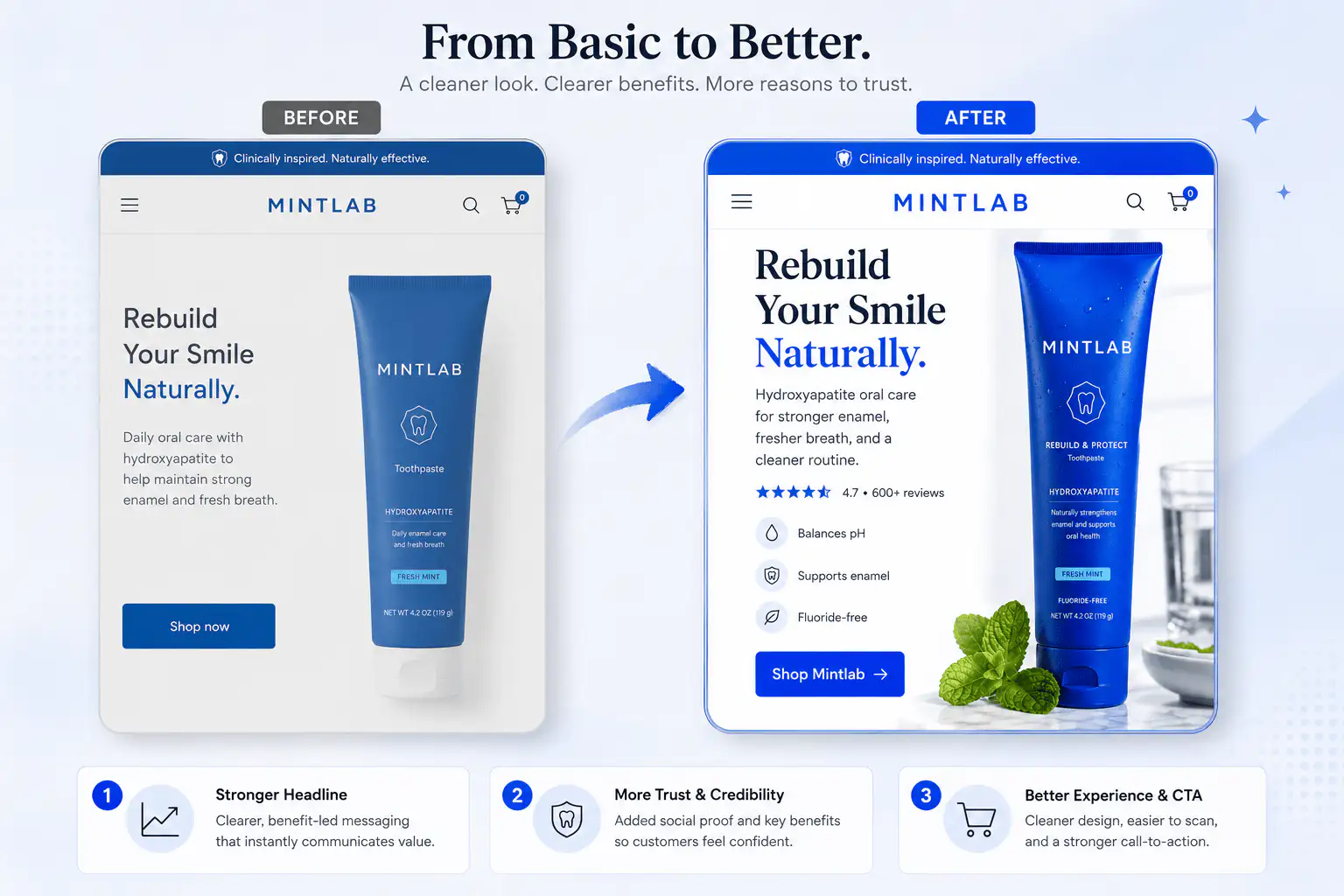
A 10-question vetting checklist
- What exact store risk have you identified?
- Which page, template, or buying-path step did you inspect?
- What evidence supports the recommendation?
- What will be included, excluded, and considered out of scope?
- What permissions do you need, and why?
- What will the founder or internal team be able to edit after handoff?
- What QA will be run before the change goes live?
- What could go wrong, and how will we roll back?
- What result should we expect, and what should we not claim?
- Why is this scope better than a theme tweak, freelancer task, audit, or full rebuild?
Not sure what kind of Shopify help you need?
Thankik can give you a Free First-Look at the store's buying path and separate obvious page, trust, mobile, cart, and launch-readiness issues from work that does not need to be bought yet.
FAQ
Are cold emails from Shopify experts always scams?
No, but cold outreach is a weak trust signal by itself. Treat it as an invitation to vet the provider, not as proof that the store needs their service. Ask for diagnosis, scope, proof, permissions, QA, and exclusions before giving access or paying.
Should I hire a freelancer or a Shopify agency?
Hire a freelancer for a contained task with clear acceptance criteria. Hire an agency or specialist team when the work touches strategy, UX, migration, conversion, launch QA, or several connected parts of the buying journey where ownership and diagnosis matter.
What should I ask before giving Shopify admin access?
Ask what exact permissions are needed, why they are needed, whether collaborator access can be used, what theme or data will be changed, how the work will be backed up, and when access will be removed after completion.
How do I know if my store needs a redesign or just fixes?
If the issue is a narrow bug or missing element, a fix may be enough. If buyers cannot understand the offer, trust the product, navigate mobile, choose variants, or complete the buying path across several pages, redesign or CRO work may be more rational.
What is a good first paid step if I am unsure?
Start with a scoped audit, first-look, or diagnostic before a full build. The goal is to identify the highest-risk bottleneck and decide whether the next step should be a theme tweak, product-page redesign, CRO fix, migration cleanup, or larger rebuild.
Sources and verification notes
- Reddit r/shopify, store owners discussing cold outreach from Shopify experts, retrieved 2026-07-25
- Shopify Partner Directory, partner discovery and services, retrieved 2026-07-25
- Shopify Help Center, collaborator accounts and access requests, retrieved 2026-07-25
- Shopify Help Center, store permissions and roles, retrieved 2026-07-25
- Trustpilot, Storetasker reviews as marketplace proof context, retrieved 2026-07-25